



How to Keep Raccoons Out of Trash: 7 Proven Methods
Table of Contents
- Why Raccoons Target Your Trash (and Why It Gets Worse)
- How to Secure Garbage Lids So Raccoons Can't Pop Them Open
- Raccoon Repellent for Trash Cans: What Works and What's a Waste
- Motion-Activated Deterrents and Other Active Defenses
- Best Raccoon-Proof Trash Cans: What to Look For Before You Buy
- Waste Management Habits That Remove the Attraction
- Municipal Rules, HOA Limits, and What You're Actually Allowed to Do
- Long-Term Strategy: Break the Habituation Cycle
- Frequently Asked Questions
Last Updated: September 23, 2026
Why Raccoons Target Your Trash (and Why It Gets Worse)
Raccoons are nocturnal scavengers that raid garbage cans because human food scraps offer an easy, reliable meal, which is why keeping raccoons out of trash starts with removing that reward. At TrashLockers, we hear stories from homeowners about tipped bins turning into nightly invasions. The Humane Society's guide to raccoon behavior explains that these clever scavengers remember food sources and return to them repeatedly.
How Habituation Turns One Visit Into a Nightly Routine
Habituation is the process where wildlife loses its fear of humans after repeated, rewarding contact with them. One spilled bin creates a food reward. That reward trains a raccoon to come back every night, often bringing others.
How to Secure Garbage Lids So Raccoons Can't Pop Them Open
The fastest way to stop raccoons is to make your garbage lid impossible to open. Raccoons have nimble paws and strong grip, so a loose lid is an open invitation. A true locking mechanism is what actually works.
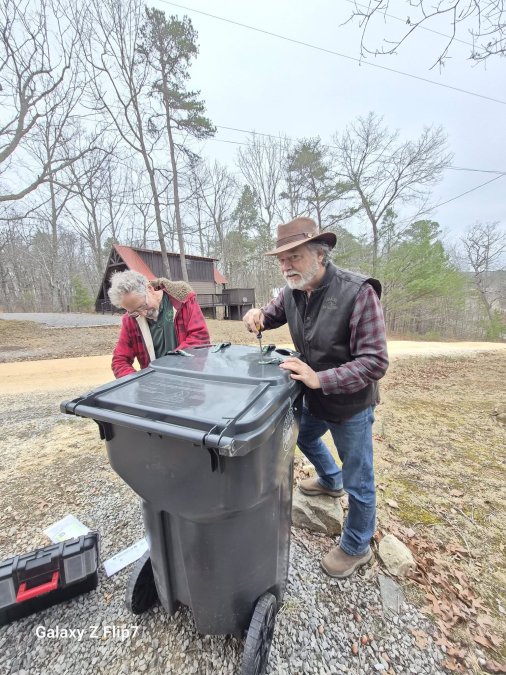
Homeowner securing a wheeled garbage bin with a heavy-duty strap to keep raccoons out of trash at dusk.
Bungee Cords, Locks, and Why Most DIY Fixes Fail
- Bungee cords: Cheap, but raccoons often defeat them.
- Heavy weights on the lid: Easy to tip over instead.
- Ratchet straps: Better, but can loosen in cold weather.
- Purpose-built locks: Hold the lid shut with a real latch.
The most reliable fix is a retrofit lock that clamps the lid down. The TrashLockers system uses a single-handed unlocking mechanism, so it's easy for you but impossible for a raccoon.
Raccoon Repellent for Trash Cans: What Works and What's a Waste
Most raccoon repellent for trash cans works only briefly, and some are dangerous. Scent-based repellents may help at first, but raccoons adapt fast. Here's how the popular options stack up.
Method |
How It Works |
Real-World Result |
|---|---|---|
Ammonia-soaked rags |
Strong smell masks food odor |
Fades fast; raccoons adjust |
Cayenne pepper |
Irritates nose and paws |
Washes off in rain |
Mothballs |
Strong chemical scent |
Toxic to pets and kids; avoid |
Motion-activated light |
Startles the animal |
Works until raccoons get used to it |
Secure locking lid |
Blocks access entirely |
Stops the raid for good |
Ammonia, Cayenne, and Mothballs: Separating Fact From Folklore
Ammonia and cayenne can discourage a raccoon for a night or two, but they don't solve the problem. Rain, wind, and time erase them.
Motion-Activated Deterrents and Other Active Defenses
Motion-activated lights and sprinklers can scare a raccoon away, but only for a while. A motion sensor light that flashes on may startle the animal the first few nights. After a week, most raccoons ignore it.
- Motion sensor lights: Startle at first, then ignored.
- Sprinkler deterrents: Effective in warm months only.
- Ultrasonic devices: Little proof they work on raccoons.
- Radio or noise makers: Raccoons adjust quickly.
Best Raccoon-Proof Trash Cans: What to Look For Before You Buy
Most "raccoon-proof" cans are not truly raccoon-proof. They are raccoon-resistant, which is a meaningful distinction. A determined raccoon can defeat a friction-fit lid, a pedal bin, or a can with a weak hinge in a single night. What separates a can that holds up from one that doesn't comes down to four specs: lid mechanism, material gauge, seal, and capacity.
Lid Mechanism: The Single Most Important Spec
Raccoons open lids by gripping the edge with their front paws and pulling up or twisting. Any lid that relies on gravity or a light snap will fail. Look for one of these mechanisms:
- Cam-lock or twist-lock lid: A rotating handle that engages two or more latches. Raccoons can't generate the coordinated twist-and-lift motion required.
- Spring-loaded latch: A latch that must be squeezed or depressed while lifting. Requires opposing hand forces a raccoon can't easily produce.
- Screw-on or threaded lid: Common on metal cans; effectively raccoon-proof but slower for daily use.
- Retrofit strap or clamp: A separate locking accessory that clamps an existing lid down. Works with municipal carts you can't replace.
Material and Gauge: What Survives Chewing and Tipping
Raccoons chew, scratch, and tip. Thin plastic fails on all three.
- Rotomolded plastic: The same process used for kayaks and coolers. Thick, seamless walls resist chewing and cracking. Heavier and more expensive than injection-molded bins.
- Galvanized steel: Chew-proof and tip-resistant, but dents and rusts over time. Best for stationary setups.
- Standard injection-molded plastic: Fine for the body, but only if the lid mechanism is genuinely locking. The walls are not the weak point, the lid is.
Seal and Capacity: The Specs Buyers Forget
- Seal: A rubber gasket or tight-fitting rim traps food odor inside. Odor is what draws raccoons from across the yard, so a good seal is a deterrent, not just a convenience.
- Capacity: Match the can to your weekly volume. An overflowing can won't close, and an open lid defeats every other feature. If your household fills a 32-gallon cart in three days, buy a 45- or 50-gallon can, not a second 32.
- Fit with your hauler: If your municipality issues a specific cart, confirm any replacement or accessory is compatible before buying. Many haulers will not empty non-issued carts.
DIY vs. Commercial: Which Actually Wins
The honest answer depends on your bin.
- If you own your can: A purpose-built locking can is the cleanest solution. No drilling, no straps to lose, no daily setup.
- If your city or HOA issues your cart: You usually cannot replace it. A retrofit lock or clamp is the only compliant option, and it is often just as effective as a new can.
- If you rent: Retrofit locks are removable and won't damage the property.
Before you buy anything, measure your current bin's lid dimensions and confirm the lock or replacement can fits. A locking mechanism that doesn't seat properly is worse than no lock at all, because it teaches the raccoon the bin is beatable.
Waste Management Habits That Remove the Attraction
A locked lid stops the raccoon tonight. Habits stop it from coming back next month. The reason most people keep seeing raccoons after they "fix" the bin is that raccoons don't just remember food, they remember places. Wildlife researchers describe this as spatial and olfactory memory: a raccoon that scored once at your driveway will check that exact spot for weeks, even after the food is gone.
Break the Scent Memory Cycle
Raccoons navigate largely by smell, and their noses are far more sensitive than ours. A bin that looks clean to you can still carry enough residue to read as a food source.
- Rinse, then rinse again. A single rinse leaves a film. Use hot water and a degreasing dish soap on any container that held meat, dairy, grease, or sweets.
- Bag in layers. Double-bagging food scraps, especially seafood, poultry, and pet food, traps odor far better than a single bag.
- Freeze the worst offenders. For strong-smelling scraps, freeze them in a sealed bag until trash day. This is the single most effective habit change most homeowners never try.
- Clean the bin itself, not just the bags. Odors soak into plastic. A monthly wash with hot water and a pet-enzyme or odor-neutralizing cleaner removes the residue that keeps drawing animals back.
- Neutralize, don't just mask. Ammonia and scented sprays add a new smell on top of the old one. Enzyme cleaners break down the odor molecules. That is the difference between covering a signal and removing it.
Timing Trash Disposal Around Your Pickup Schedule
Timing matters more than most people think. If your trash pickup schedule is in the morning, put bins out the morning of, not the night before. An overnight bin sits exposed for hours, and those hours are exactly when raccoons are most active.
- Check your pickup time and set a reminder.
- Put bins out as late as your hauler allows.
- Bring empty bins in the same day.
- Never leave bags beside a full bin. A bag on the ground is an open invitation and undoes every other measure.
The Long-Term Habituation Problem
Here is the part most guides skip. Raccoons are creatures of routine. Once a specific driveway becomes part of their nightly circuit, they will keep checking it even after the reward disappears. This is habituation in reverse, the animal is habituated to the location, not just the food.
Breaking that circuit takes consistency, not intensity:
- Zero rewards, every night. One slip, one unlatched lid, one bag left out, resets weeks of progress.
- Change the environment. Move the bin a few feet, or shift where it sits. Raccoons rely on consistent landmarks; disrupting the layout makes the spot less reliable.
- Expect a tapering-off period. Visits can become less frequent over time with consistent denial. The raccoon is not gone on night one, it is testing.
- Don't reward persistence. If you hear a raccoon trying the lid and go outside to chase it, you have added a new stimulus to the routine. Let the lock do the work.
What Not to Do
- Don't pour ammonia or bleach into the bin. It is dangerous to pets and children and does not address the residue causing the smell.
- Don't rely on scented trash bags alone. They mask odor in the kitchen but break down in the bin.
- Don't leave pet food outside overnight. A bowl of kibble is a more reliable food source than your trash, and it will keep raccoons coming back regardless of how well you secure the bin.
The combination that works is simple: remove the food, remove the smell, and deny access every single night until the animal stops checking. Habits handle the first two. A locked lid handles the third.
Municipal Rules, HOA Limits, and What You're Actually Allowed to Do
Before you buy any lock or drill into a bin, check your local rules. Some cities issue specific carts and restrict modifications. Many HOAs limit what you can attach or where bins can sit.
Here's where homeowners get stuck:
- Some municipalities require you to use their issued bins.
- Some HOAs ban visible locks or straps.
- Some areas have rules about bin placement and timing.
Long-Term Strategy: Break the Habituation Cycle
The core truth behind how to keep raccoons out of trash is simple: remove the reward. Repellents and lights only delay the problem. A secure, locked lid ends it.
Frequently Asked Questions
What can I spray on garbage to keep animals away?
Ammonia-based sprays and cayenne pepper solutions are the most commonly used DIY repellents for raccoon repellent for trash cans. Mix one part ammonia with three parts water in a spray bottle and mist the outside of the bin and lid. Cayenne pepper mixed with water and a few drops of dish soap also works as a scent-based repellent. Reapply after rain, since both lose potency quickly. These sprays discourage raccoons but do not stop determined animals from returning once the scent fades.
What do raccoons hate the most?
Raccoons avoid strong ammonia smells, cayenne pepper, and bright unpredictable light. They also dislike loud noises and sudden motion. The bigger deterrent, though, is a lid they cannot open. Raccoons are clever scavengers that learn fast, so a scent-based repellent buys you a few nights at best. A locking mechanism or animal-resistant bin removes the food reward entirely, which is what actually changes their behavior long term.
Are there specific locks for garbage cans to stop raccoons?
Yes. Retrofit locking straps and lid locks are designed to clamp over the existing lid of a standard wheeled cart, holding it shut against tipping and prying. Look for hardware that is certified animal-resistant rather than a generic bungee cord, since raccoons can work cords loose with their paws. A single-handed unlocking mechanism keeps the bin easy for you to open on pickup day while staying closed the rest of the week.
How do you keep raccoons away permanently?
Permanent results come from removing the food source, not from scaring raccoons off once. Secure the lid with a locking mechanism, rinse food scraps from containers before they go in the bin, and put trash out the morning of pickup instead of the night before. Clean the bin regularly with a bleach solution to cut odor. Once raccoons stop finding food, they stop coming back, which also prevents habituation in the local population.
Raccoons are persistent, and one weak spot in your setup invites them back. TrashLockers makes a retrofit lock that secures your existing bin with a Certified Black Bear-Resistant latch and a single-handed unlocking mechanism. It installs in minutes, holds up to wind and wildlife, and removes the food source that starts the problem. Order your Trash Locks today and stop the nightly raid for good. You can try to make one yourself, or order a tried-and-tested Trash Lock. If it can withstand a black bear, it will definitely keep your raccoons hungry, since they won’t be in your trash
You Might Also Like


 USD
USD EUR
EUR
 CAD
CAD
 CHF
CHF
 JPY
JPY


