



Stop Bears From Raiding Garbage Cans: A 2026 Guide
Table of Contents
- Why Bears Target Garbage Cans and How to Stop Them
- Install Bear-Resistant Trash Can Locks
- How to Keep Raccoons Out of Trash While Deterring Bears
- DIY Bear-Proof Trash Can Modifications and Storage Solutions
- Chemical and Natural Deterrents That Actually Work
- Maintenance and Long-Term Bear-Proofing Schedules
- Common Mistakes That Make Your Trash More Vulnerable
- Frequently Asked Questions
Last Updated: September 30, 2026
Why Bears Target Garbage Cans and How to Stop Them
Bears raid garbage cans because trash smells like an easy meal. Once a bear finds your trash, it returns repeatedly- a behavior called habituation that makes the bear increasingly dangerous to your family and pets.
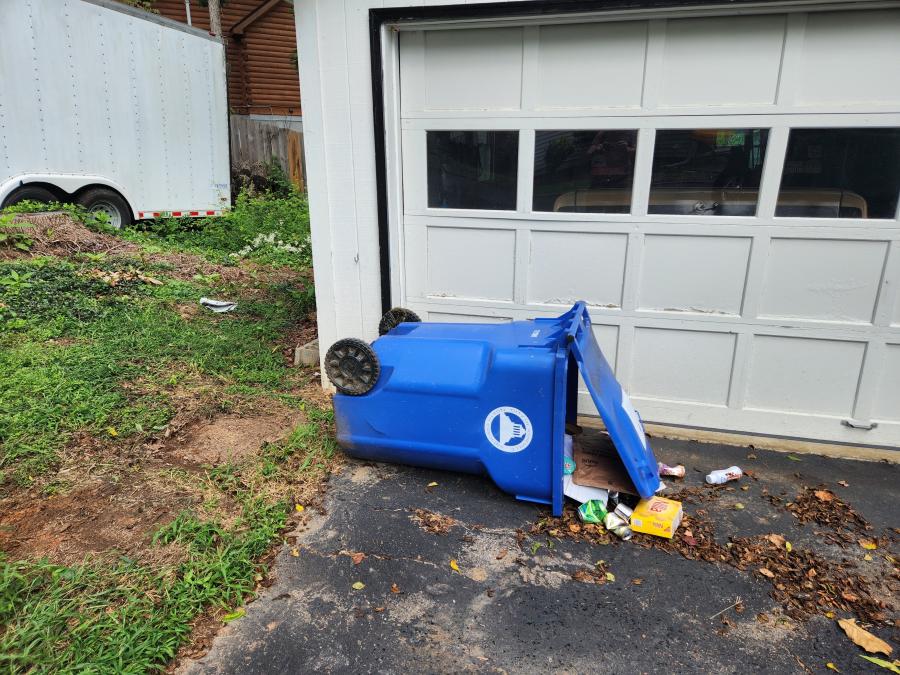
The good news: you can stop bears from raiding garbage cans with the right approach. A combination of secure storage, physical barriers, and deterrents works far better than any single method alone. According to wildlife management guidance from state fish and wildlife agencies, the most effective strategy removes the attractant entirely: your garbage.
Bears are intelligent foragers that test obstacles and remember what works. A certified bear-resistant lock prevents both the mess and the habituation that makes bears dangerous.
Install Bear-Resistant Trash Can Locks
A certified bear-resistant lock is the fastest way to stop bears from raiding garbage cans. These locks use high-strength polyester straps and heavy-duty buckles designed to resist the force a bear can apply.

Two options exist: the Original for occasional bear visits, and the Ultimate, which is certified bear-resistant for frequent pressure. Both use a single-handed unlocking mechanism.
Original vs. Ultimate: Choosing the Right Lock for Your Situation
The Original Trash Lock suits occasional black bear problems and is a bear deterrent. It uses two straps with stainless steel hardware and a break-force of nearly 300 lb-force, with permanent attachment to your can. This will frustrate a bear looking to tip over your trash looking for an easy meal, but will not stop a persistent or determined bear.

The Ultimate Black Bear Trash Locks are certified bear-resistant with four straps total, so both the front and sides of the cart can be secured. Choose the Ultimate if bears visit regularly or you live in a high-bear-activity area.
Feature |
Original |
Ultimate |
|---|---|---|
Straps per set |
2 |
4 |
Bear-resistant certified |
No |
Yes |
Best for |
Occasional visits |
Frequent visits |
Price |
$24.95 |
$44.95 |
Installation time |
10 minutes |
15 minutes |
Installation Steps for Maximum Security
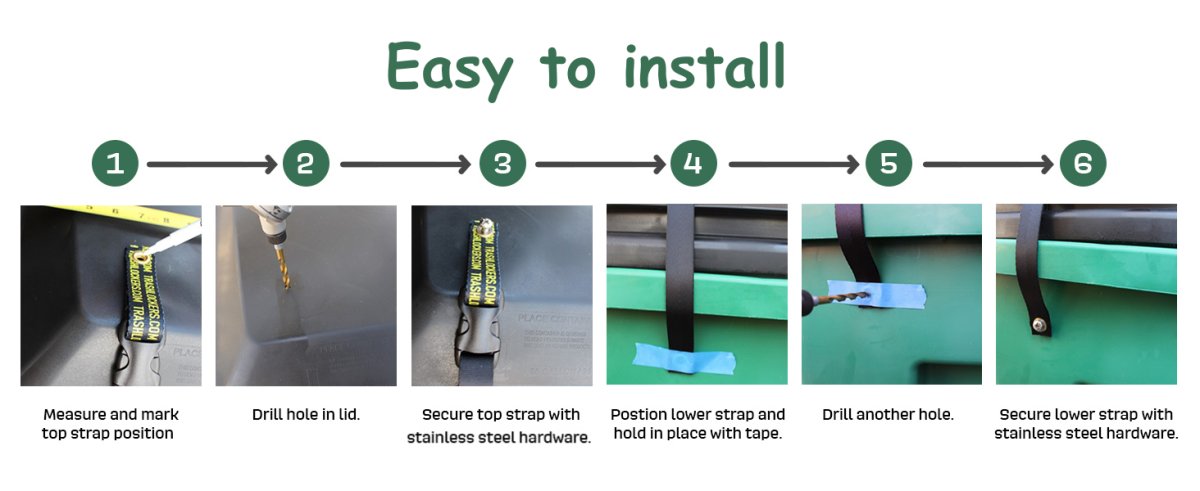
Installation requires a measuring tape, drill, drill bit, wrench, and Phillips screwdriver:
- Position your straps on your cart. Measure where the top straps will sit. The buckle should sit an inch or two back from the edge of the lid Mark bolt holes with a marker.
- Drill holes through the can. Use a 1/4” drill bit (the same as the bolt diameter).
- Secure top strap with stainless steel hardware. You want it attached to the lid so the hole for the bottom strap can be positioned correctly
- Position the Lower Strap and hold it in place with tape. You want the strap to have a little bit of play, so it is easy to use but not enough that a bear can get a paw under the lid. Press the buckle release and lift the strap. This motion should be smooth and repeatable
- Drill hole for the lower strap
- Secure lower strap with stainless steel hardware. The nuts are serrated, so they will dig into the plastic cart and lock into place so you want them pretty tight.
- Proper installation is critical, a loose bolt or too much slack in the strap defeats the entire system.
How to Keep Raccoons Out of Trash While Deterring Bears
Raccoons are persistent and have dexterous paws. Combine physical barriers with scent control.
Raccoons enter through lid gaps and tip cans over.
Keep the trash area clean. Rinse containers before disposal and sweep weekly; a clean area signals "no food here" to wildlife.
DIY Bear-Proof Trash Can Modifications and Storage Solutions
Locking the can inside a shed or garage is the most effective DIY solution, eliminating the attractant entirely.
Secure Storage Locations and Timing
Store trash in a garage, shed, or enclosed area. If outdoor storage is necessary, place cans at least 100 feet from your home to reduce the chance a bear will approach.
Put trash out the morning of collection, not the night before. Bring cans in immediately after pickup.
Keep trash secure year-round; raccoons remain active in winter.
Electric Fencing and Physical Barriers
A 6-foot fence makes trash access harder; combine with a lock for best results. You can also use electric bear mat like the ones from Bearier Solutions
Chemical and Natural Deterrents That Actually Work
Deterrents alone rarely stop bears but work well with physical barriers. Bears ignore deterrents that don't cause genuine discomfort after one or two encounters.
Why Common Deterrents Fail (And How to Use Them Correctly)
Cayenne pepper: While capsaicin (the active chemical in peppers) is what makes official bear spray effective under direct pressure, loose household cayenne powder does not release enough airborne irritant to stop a determined bear. In some cases, it can actually attract them due to curiosity of food-like scent.
Ammonia: Strong chemical and industrial-strength ammonia produces pungent fumes that temporarily overwhelm a bear's acute sense of smell. However, direct contact with liquid ammonia can cause chemical burns or blindness. Never mix ammonia with bleach, as this creates a toxic and lethal gas. As a deterrent, wiping down trash cans with an ammonia-water mixture can discourage scavenging
Ultimate Black Bear Trash Lock →
Motion-Activated Lights and Sprinklers: Startle vs. Learning
For motion-activated deterrents to remain effective, vary timing and intensity, combine with unpredictable elements, position to cover approach paths, and combine with a physical barrier.
Noise Deterrents: Why They Fail Fastest
Radios, air horns, and noise makers are the least effective deterrents because bears quickly learn they pose no threat and may even associate noise with human activity and food.
The Layered Deterrent Approach
Use chemical and natural deterrents as a secondary layer. A bear encountering a locked can, ammonia-soaked perimeter, and motion-activated light is far more likely to move on. Bears test the easiest targets first; make your trash the hardest target on the block.
Maintenance and Long-Term Bear-Proofing Schedules
Bear-proofing requires seasonal maintenance. Bears are most active in spring (March-May) and fall (August-October, during hyperphagia). Align your maintenance schedule with these windows.
Pre-Season Checklist: Prepare Before Bear Activity Peaks
In late February or early March:
- Inspect and tighten all bolts with a wrench.
- Inspect the can for dents, cracks, or rust; replace if significant.
- Clear vegetation within 10 feet of storage area.
- Verify storage location doors close fully and latches work.
In late July or early August:
- Repeat bolt inspection and tightening.
- Rinse and dry the can thoroughly; residue attracts bears during fall hyperphagia.
- Clear vegetation and remove fallen fruit from nearby trees.
- Test motion-activated lights or sprinklers and replace batteries.
Monthly Maintenance During Bear Season
From March through October, inspect monthly:
- Tighten bolts.
- Wipe down straps and hardware.
- Rinse and dry the can completely.
- Check for claw marks, dents, or bite marks and repair immediately.
- Verify trash is out only on collection day morning and brought in immediately after pickup.
Replacement Schedule and Lifecycle
We do suggest updating your Trash Locks every five years.
Inspect bolts annually for surface rust.
Replace trash cans if they develop visible deep dents, or cracks.
Seasonal Storage: Winter and Off-Season
Keep trash locked and stored securely year-round; raccoons remain active in winter.
Record Keeping: Track Your Maintenance
Create a maintenance log noting inspection dates, condition of bolts and straps, repairs made, and animal activity. This helps you spot patterns in wear and bear behavior.
Common Mistakes That Make Your Trash More Vulnerable
The biggest mistake is installing a lock and assuming the problem is solved. A lock is one layer of protection. Without proper storage location, timing, and cleanliness, bears will return.
Loose installation is another critical error. Many people hand-tighten bolts and call it done. Hand-tight bolts loosen over time. Use a wrench to tighten every bolt firmly.
If possible, put trash out the morning of collection only.
Storing trash near your home is another common error. A bear that reaches your trash is close to your windows, doors, and family. Keep trash at least 100 feet away.
Forgetting to secure the lid properly is surprisingly common. A lock means nothing if the lid is propped open. Always close the lid fully before locking it.
Stopping bears from raiding garbage cans requires a multi-layered approach: a certified lock, proper storage, regular maintenance, and smart timing.
Frequently Asked Questions
Are there certified bear-resistant trash can locks that actually work?
Yes. The Ultimate Black Bear Trash Locks are the first product certified as black bear-resistant for retrofitting existing trash carts. They feature four straps with buckles rated for nearly 300 lb-force, designed to prevent bears from opening cart lids. The certification was tested with a 95-gallon cart and proven effective at deterring bears from accessing food sources, causing them to move to easier alternatives.
Can I use bear-resistant locks on trash cans I already own?
Yes. Both the Original and Ultimate Trash Locks retrofit onto existing garbage cans with hinged lids. The Original uses two straps and works as a deterrent for occasional bear problems, while the Ultimate adds two side straps for frequent bear activity. Installation requires stainless steel nuts and bolts permanently attached to your can—no new purchase needed. Most homeowners complete installation in well under an hour. Of course, the type of trash cart you have make a difference. We have done significant testing with both the Rehig-Pacific and Schaffer 95 gallons carts. These are used by a great many municipalities and trash companies.
What's the difference between keeping raccoons and bears out of trash?
Bears require stronger, multi-point security because they're more aggressive and persistent. The Ultimate Trash Locks with four straps provide the security level needed for bear activity, while also keeping raccoons, possums, and dogs out. Proper lid latches and secure storage location matter for both species.
How often should I maintain or replace bear-proof trash can locks?
Inspect locks monthly for wear, corrosion, or damage to stainless steel bolts and polyester straps. Replace any worn components immediately. We suggest updating your Trash Locks every five years.
You Might Also Like


 USD
USD EUR
EUR
 CAD
CAD
 CHF
CHF
 JPY
JPY


